Follow the Fin: A Half-Day Whale Hunt Through Landlocked Cambridge
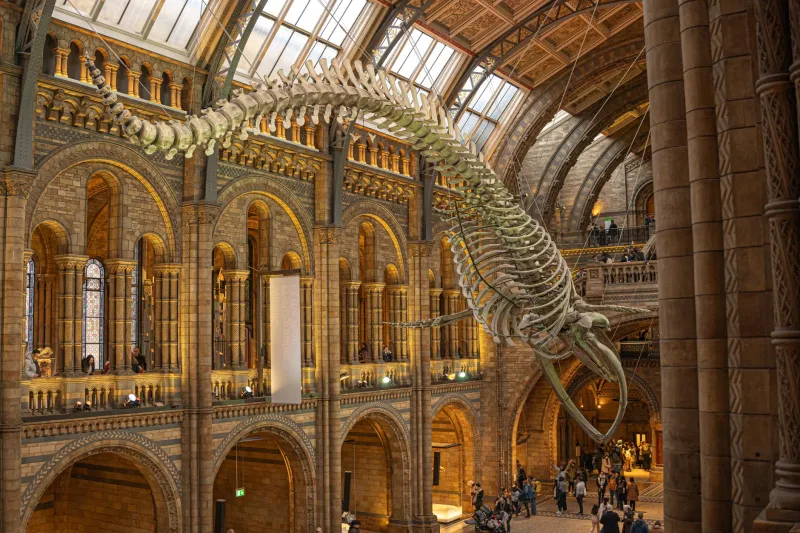
Cambridge is landlocked. You can walk from the Cam to a bookshop to a bus stop without seeing a wave. So it feels slightly absurd—in the best way—that the city is also home to a whale. Not a statue, not a mural: a real finback whale skeleton, hanging above the floor of the Museum of Zoology on Downing Street. This half-day trail uses that skeleton as its north star, then hunts for other watery wonders in the museums next door. It's gentle enough for small legs, buggy-friendly and built around two snack stops.
The route at a glance
Start at the Museum of Zoology (Downing Street), spend 45 to 60 minutes with the whale. Walk next door to the Sedgwick Museum of Earth Sciences for 30 to 45 minutes of fossils and sea monsters. Then head to Parker's Piece for a runaround and a snack, with an optional extension to the Polar Museum or the Botanic Garden if everyone still has energy. Total time: about two and a half hours, plus snacks. Both museums are free.
Stop 1: Look up at the finback whale
The whale hall is the kind of room that makes children go quiet for a second. The finback whale skeleton is around 21 metres long—roughly the length of two buses—and it hangs above the gallery. Fin whales are the second-largest living animals on Earth, after blue whales, which is a fact worth repeating slowly. The skeleton is real, and it has been in Cambridge for decades; the museum reopened after a big refurbishment in 2018, so the display feels fresh even though the bones are old.
Sketch-stop prompt: ask your explorer to draw the whale's tail as if it were a giant heart. Or count how many bones they can see in the flipper and write the number in the corner.
Accessibility: the museum has step-free entry, lifts and space for buggies. Check opening hours before you go, and avoid the busiest school-holiday middays if your child likes a quieter room.
Stop 2: Hunt for sea monsters in stone
The Sedgwick Museum is next door and full of fossils. Look for the marine reptiles—ichthyosaurs and plesiosaurs—that swam in warm seas long before Cambridge had colleges. There are shells, corals and fish pressed into rock, which is a good moment to explain that this part of England was once underwater. For a small child, the best bit is usually the giant fossilised shells and the 'is that a real bone?' questions.
Sketch-stop prompt: invent a sea creature that could live in the Cam. It needs a tail, a snack and a name. Draw it on the back of the trail sheet.
Accessibility: the Sedgwick has step-free access and lifts; check the website for current details. There are toilets nearby and benches for a breather.
Stop 3: Snack and charge about on Parker's Piece
Walk five minutes to Parker's Piece, the big green space between the museums and the city centre. This is where the trail loosens up: run, jump, chase pigeons, then sit on a bench for a snack. Fitzbillies on Trumpington Street is a short walk if you want cake, or bring your own biscuits and a flask. There are toilets at the Grand Arcade, a few minutes further on.
Sketch-stop prompt: draw the biggest puddle you can find, then add a whale spouting from it. Landlocked Cambridge is allowed a little artistic licence.
Accessibility: Parker's Piece is flat and paved in parts, with benches and lots of space for buggies. It can be windy, so bring an extra layer.
Optional extension: cold seas and water lilies
If your small explorer is still going, the Polar Museum on Lensfield Road has displays about icy seas and exploration—check opening hours, as they vary. In summer, the Botanic Garden on Bateman Street has water lilies and a fountain that make a nice, calm finale. Both are a 10- to 15-minute walk from Parker's Piece.
Trail kit for tiny whale-spotters
- A small clipboard or hardback book to lean on.
- Pencils, not pens—fewer disasters.
- A magnifying glass for fossils and leaves.
- Snacks, water and wipes.
- A jumper for the windy bit.
Believe-it-or-not facts to deploy
- The finback whale skeleton is about as long as two double-decker buses.
- Fin whales are the second-largest animals ever known to have lived.
- The Sedgwick's marine reptiles were swimming around when dinosaurs were on land.
- Cambridge's museum collections include creatures from the deep sea, even though the city is miles from the coast.
Practical notes
Both museums are free, which makes this a genuinely budget-friendly half-day. Check opening days and times before setting out, especially around bank holidays. The route is mostly flat and step-free, but cobbles near the city centre can be bumpy for scooters. Start around 10am for the quietest galleries, or after lunch if your child naps. And if you only do one stop, make it the whale—it's the kind of thing children remember.