Rocking the Boat: An Honest Look at Whether Punting Really Works With a Toddler in Tow
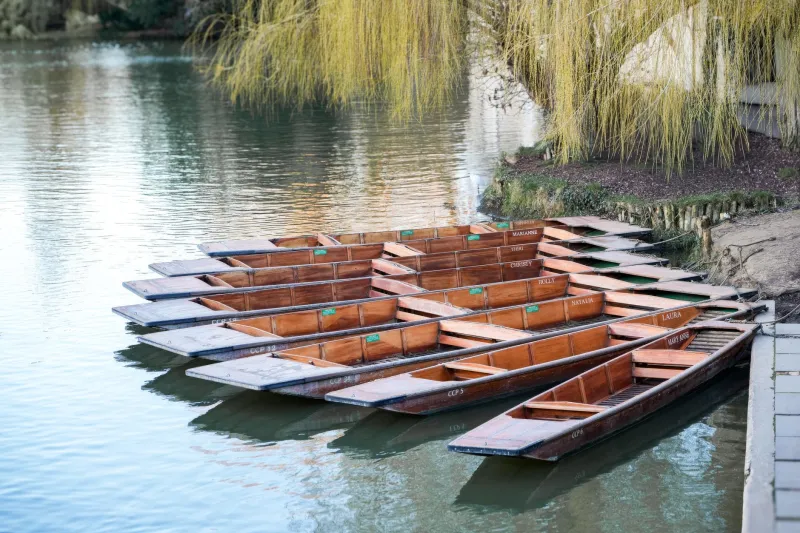
Let's be honest about something. There's a photograph in your head of the family punting in Cambridge. Sunlight through the willows, someone in a striped blazer leaning on a pole, a small child sitting serenely with a sun hat and a biscuit. It's a lovely photograph. It is also, in roughly 40 per cent of cases, a complete fiction.
Punting is Cambridge's signature activity and we're not here to talk you out of it. But if your child is under five — and especially if they've recently discovered that standing up and shouting are two of their very best skills — it pays to know exactly what you're buying. So we've done the legwork, talked to parents who've been there, and put together the sort of honest guide we wish someone had handed us.
First, the good news: it really is lovely
On a calm weekday morning, with the sun on the water and a bag of snacks to hand, a punt is genuinely one of the best hours you can spend in the city. The rhythm of the pole going in and out is oddly hypnotic for small children. The river behind the colleges — the stretch known as the Backs — is quiet enough to spot ducks, moorhens and the occasional heron, and there's nothing quite like watching a three-year-old realise that the swans are right there.
Chauffeured punts (where someone else does the hard work) are the sensible option with little ones. You sit, you point at things, you say goodbye to the ducks. Nobody's child is going overboard because a parent lost their grip on a pole.
The safety bit (because it matters)
Let's get this out of the way, because every experienced parent we spoke to brought it up unprompted. Punt hulls sit low in the water, and there is no rail. That's not a scaremongering point — it's just geometry. Your child's centre of gravity is high, their enthusiasm for leaning over is enormous, and the water is cold and murky.
In practice, this means:
- Life jackets. Ask for them. Reputable operators keep child-sized ones on hand, and nobody has ever regretted asking.
- One adult, one child. Don't try to supervise two under-fours from a single bench seat.
- Keep them inside the hull footprint. Sitting on laps or on the floor cushion is fine. Sitting on the side edge with legs dangling is a no.
- Pick a calmer stretch. The Backs are quieter than the busier city-centre moorings on a Saturday afternoon.
One mum from Chesterton put it neatly: "It was wonderful for about twenty minutes and then he wanted to take his shoes off and go swimming. We went for the forty-minute trip and I'd say the first twenty-five were magic."
What it actually costs in 2026
Prices vary by operator, but broadly you're looking at roughly £20–£30 per adult for a shared chauffeured trip of around 45 minutes, with under-fives often going free or at a token rate. Private hires — where you get the whole boat to yourselves — cost considerably more but are worth considering if you've got a nervous child, a large group, or simply no appetite for making small talk with people who've never met a tantrum.
Compare that to the cost of a family trip to a soft-play centre and it starts to look reasonable. Compare it to a free walk along the riverbank and it doesn't. Both are valid.
Buggy storage: the practical bit nobody mentions
Here's a genuinely useful thing to know. Most punting operators have somewhere to leave a folded buggy at the mooring, but it's not a locked locker room — it's more of a "we'll pop it in the back" arrangement. If your pushchair is the sort that folds down to the size of a large hardback, brilliant. If it's the sort that requires a degree in mechanical engineering, phone ahead.
Also: no, you can't take it on the punt. There isn't room, and it would be a menace. Bring a sling or a carrier as a backup, especially for the walk to and from the river.
The attention-span question
Forty-five minutes is a long time in the life of a two-year-old. In practice, parents reported a pattern. Ten minutes of wide-eyed delight. Fifteen minutes of pointing at birds. Ten minutes of snack-based diplomacy. And then, depending on the child, either a nap or a wobble.
If your child is particularly wriggly, the honest advice is this: a short trip beats a long trip. Several operators run twenty-five-minute loops, which is very close to the perfect length. If that's not available, pick the earliest slot of the day when children are freshest and the light is best, and don't over-schedule the rest of the morning afterwards.
The toddler-friendlier alternatives
Here's the thing — if what you're really after is ducks, water and a bit of gentle magic, there are options that carry considerably less risk of a soaking.
The riverbank walk. Free, low-stakes and unexpectedly good. Follow the towpath from Mill Pond out towards Stourbridge Common and you get herons, narrowboats and the occasional interesting dog.
A rowing boat at the smaller colleges. Shorter, cheaper and you can turn round whenever you like.
The paddling-pool approach. For very small children, sometimes the best answer to a hot day isn't a boat at all. It's a splash in something a foot deep.
Just walk into the colleges. Most of the central colleges charge a small entry fee and have courtyards, lawns and bridges that a toddler will find genuinely magnificent. No water, no wobble.
The stress-free float checklist
If you're going for it — and honestly, on the right day, you should — here's our short list:
- Book an early slot, before the crowds and before the tiredness kicks in.
- Choose a chauffeured trip over a self-punt, every time.
- Ask for a child life jacket before you board, not after.
- Bring a sling, a snack bag and a small, quiet toy.
- Keep the trip short. Twenty-five minutes will feel like a triumph; forty-five is a gamble.
- Phone ahead about the buggy if you're unsure.
- Have a plan B. The riverbank is always there.
The verdict
Punting with a toddler is not impossible. It's not even particularly difficult, most days. But it is a deliberate activity — it needs a bit of thought, an early start and a realistic attitude to how long a small person can sit still.
Do it right and you'll get the photograph. Do it carelessly and you'll get a memory anyway, just a wetter one. Either way, you'll be back on dry land within the hour, probably in search of a biscuit. And that, frankly, is what a good Cambridge day out looks like.